


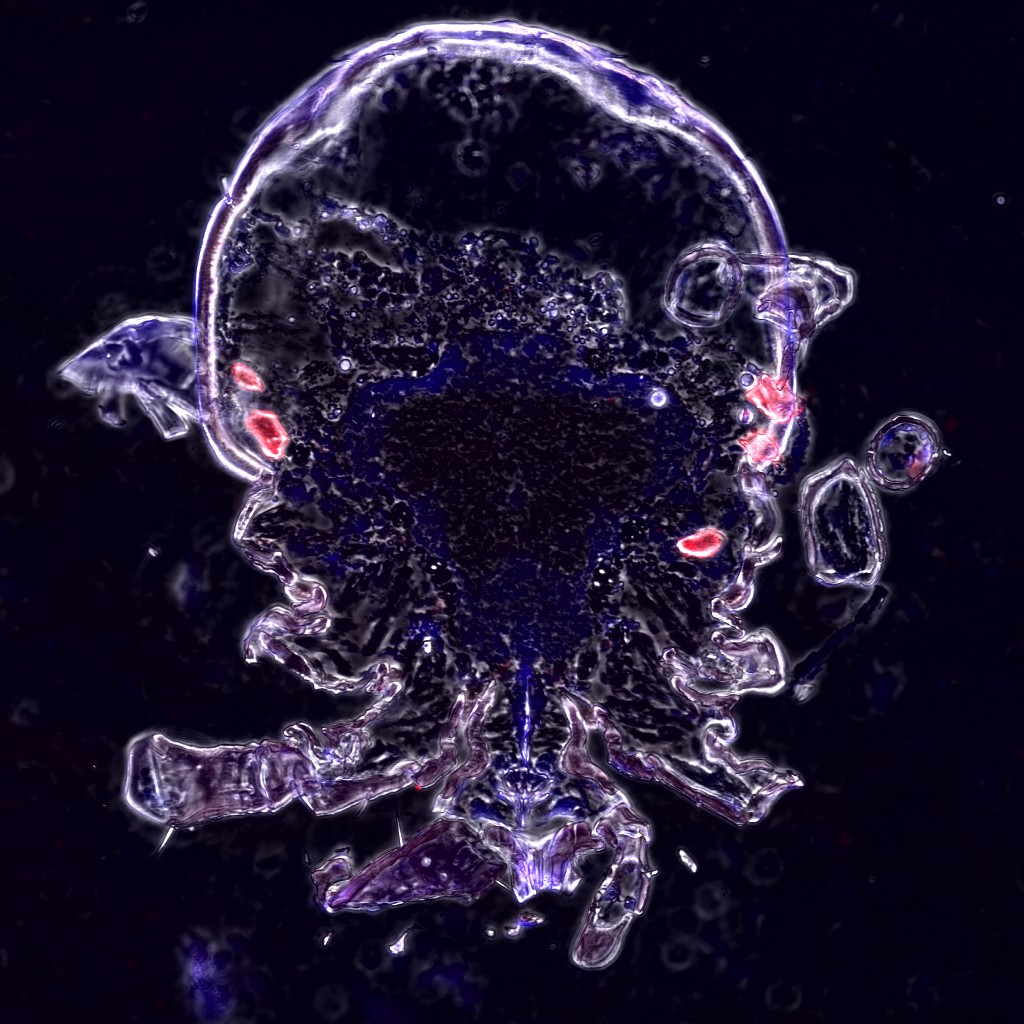
A team of scientists from the Department of Chemistry at the Faculty of Science of the University of South Bohemia in České Budějovice has made a surprising discovery in tick biology. A new study shows that the castor bean tick (Ixodes ricinus) is capable of producing sialic acid on its own – a molecule that has until now been associated primarily with the cells of vertebrates, including humans. The discovery fundamentally changes the existing understanding of the biochemistry of these important vectors of infectious diseases and may, in the future, influence research into the transmission of dangerous diseases by ticks.
Sialic acid plays a key role, for example, in the immune system in distinguishing "self" from "non-self", in cell development, and in the recognition of host cells by certain pathogens.
In invertebrates, however, it occurs only exceptionally, and the ability of ticks to produce it had not previously been clearly demonstrated. The new research provides the first direct evidence that ticks not only contain this substance, but also actively produce and utilise it.
The scientists found that the tick possesses the complete genetic toolkit required for the synthesis of sialic acid and its incorporation into so-called sialylated glycoproteins – specific proteins with important biological functions. They also revealed that the tick uses an alternative biosynthetic pathway to produce them, one that differs from the mechanisms common in vertebrates.
In the course of making this discovery, the researchers used a modern method known as "Click chemistry", for the development of which Carolyn R. Bertozzi, Morten Meldal, and K. Barry Sharpless were awarded the Nobel Prize in Chemistry in 2022. Using this method, the South Bohemian scientists were able to directly visualise the molecules and track their presence throughout the entire life cycle of the tick. Sialylated glycoproteins were detected in all monitored stages – in adult females, in eggs, and in larvae, as well as in laboratory-cultured tick cells. The highest concentrations were observed in the early developmental stages.
"Our results suggest that sialylated glycoproteins may play a key role in tick development. This discovery thus opens new questions regarding the biological functions of these molecules and their possible significance for the survival and adaptation of ticks," says study author Ján Štěrba from the Faculty of Science of USB.
The findings are relevant not only for basic research, but also for medicine and public health. A better understanding of how ticks function at the molecular level may in the future contribute to the development of new approaches to reducing their feeding on humans or livestock, or their ability to transmit dangerous pathogens, such as the causative agents of Lyme disease or tick-borne encephalitis.


