


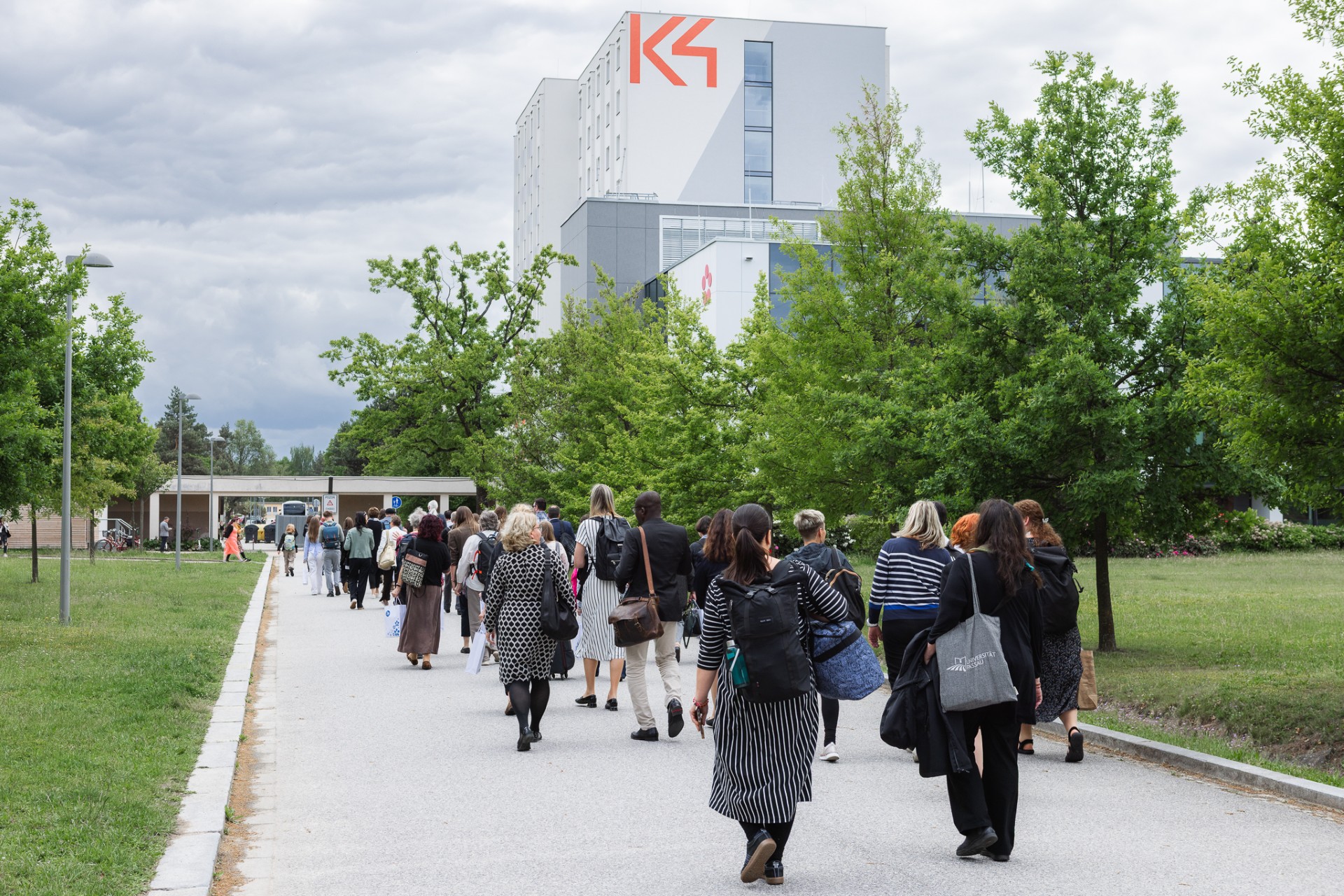
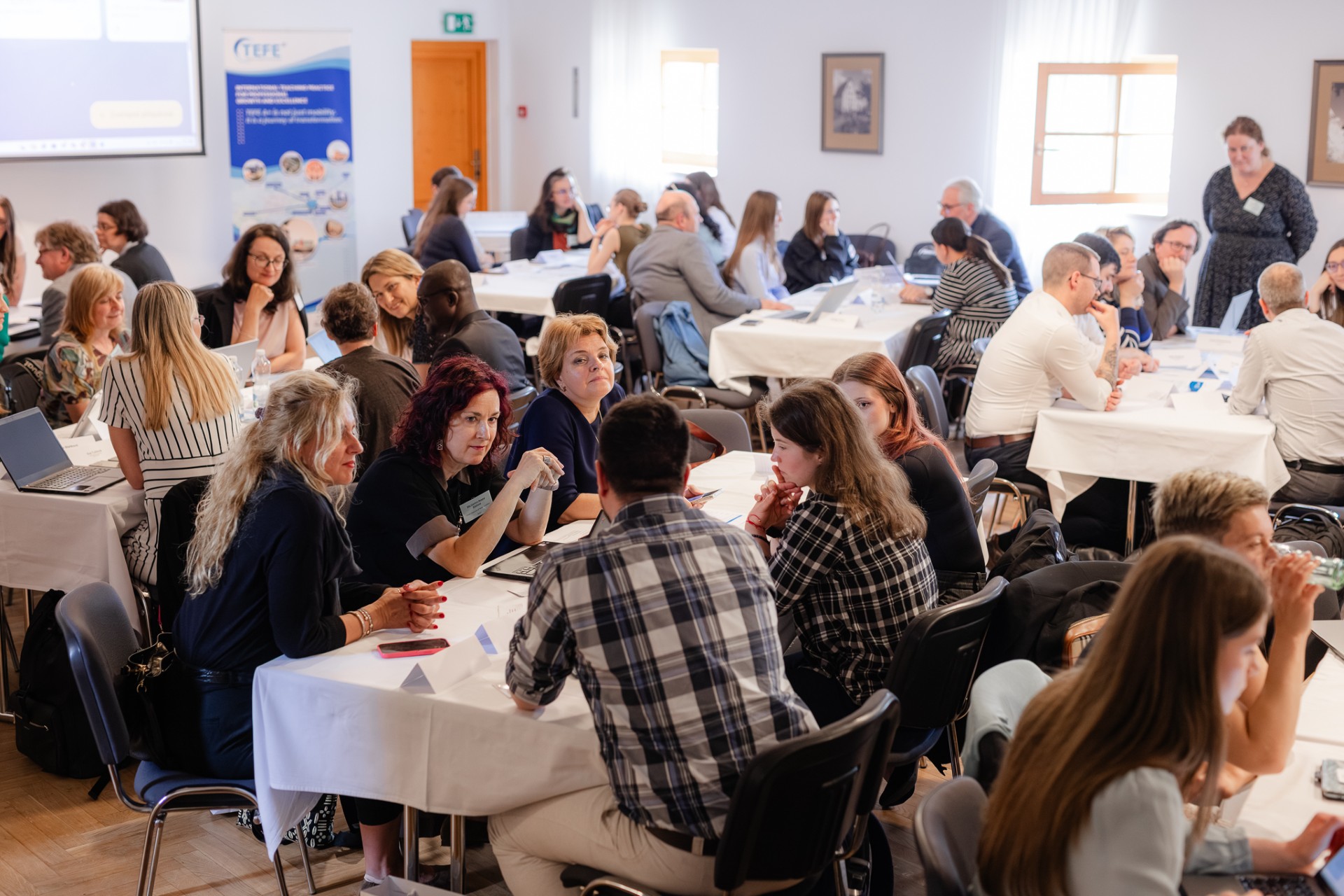
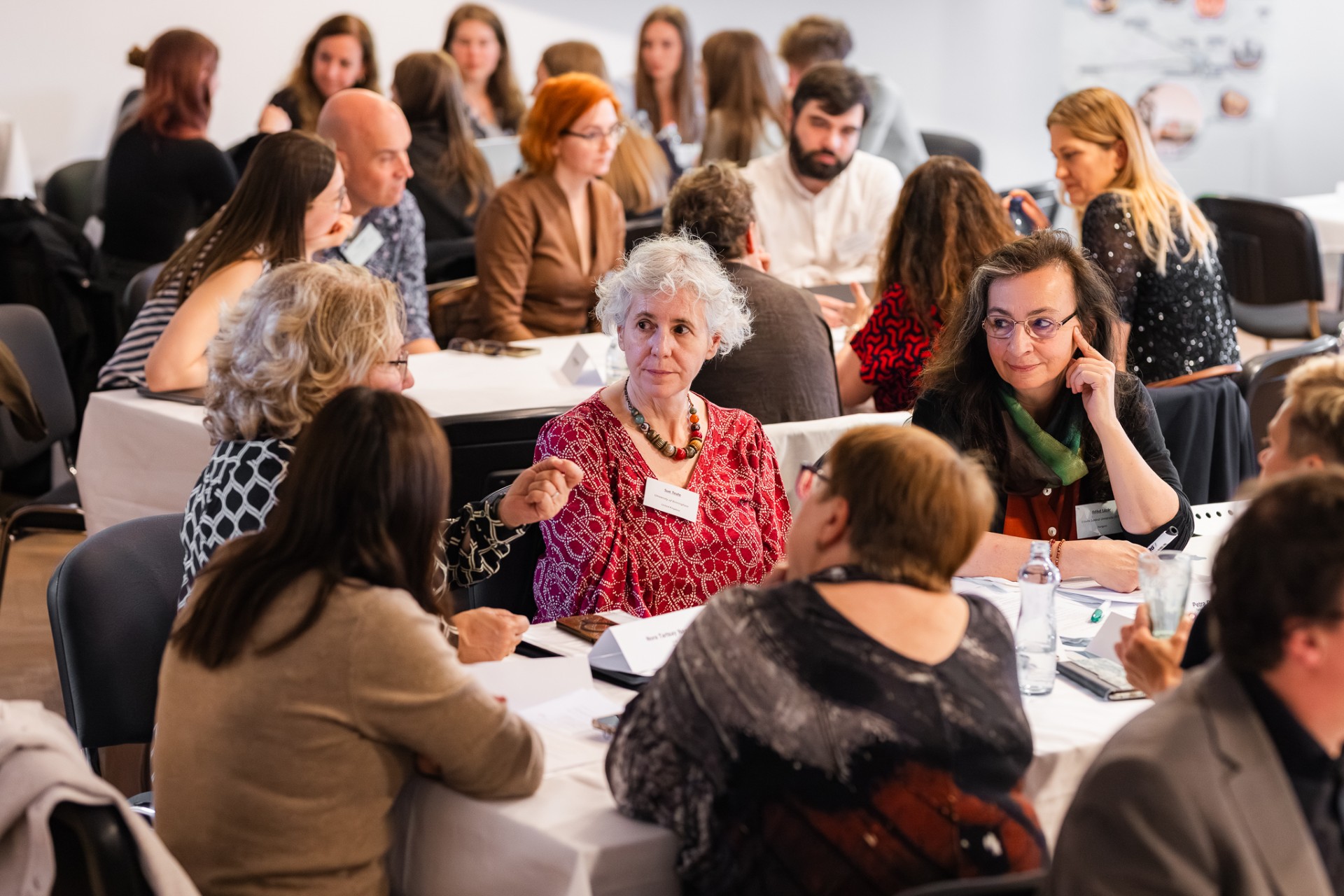
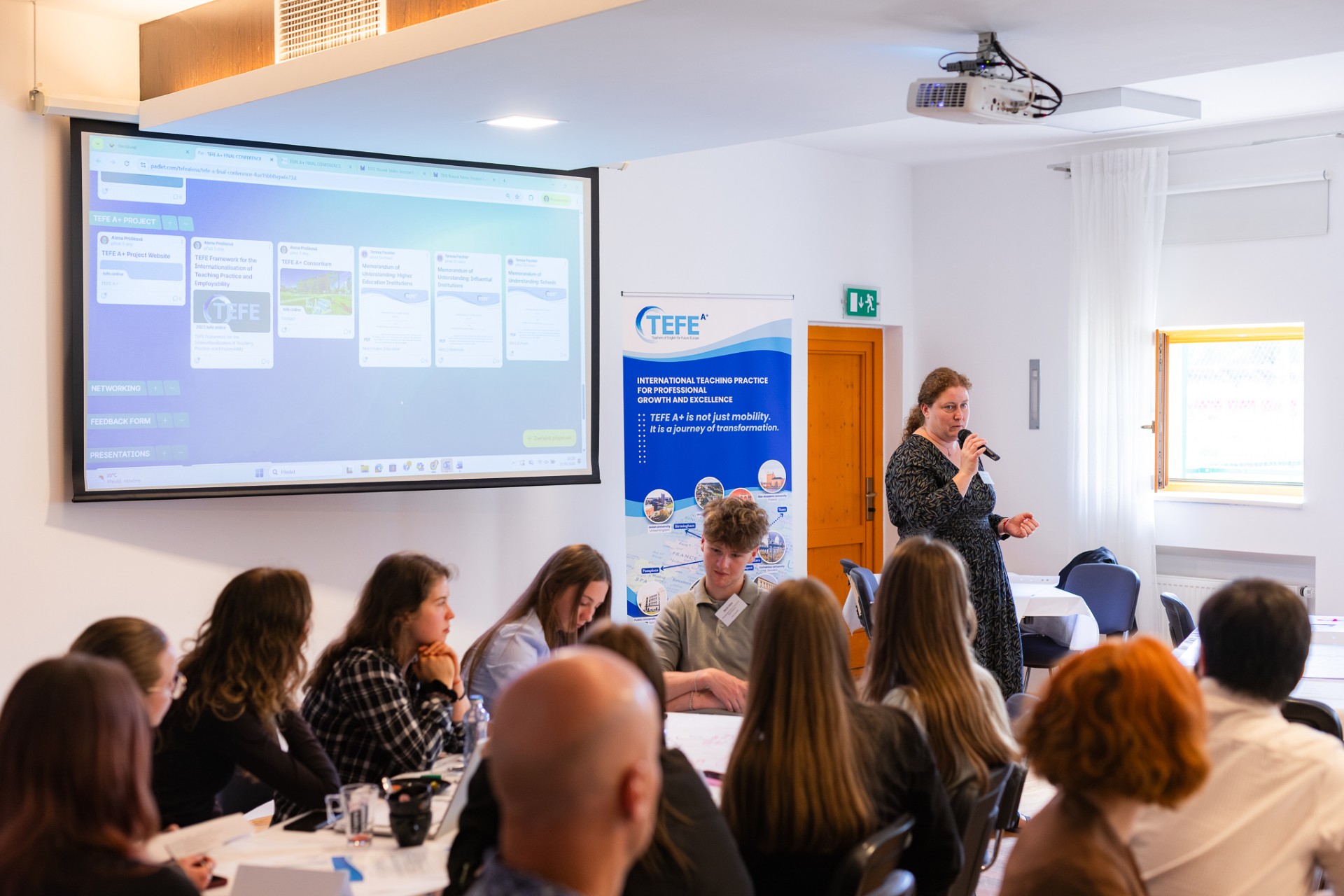
On 21 May 2026, the Faculty of Arts at the University of South Bohemia organised the international conference International Teaching Practice: Teaching English, Bridging Cultures, Shaping Futures, held as part of the Erasmus+ TEFE A+ project (Teachers of English for Future Europe). The conference took place under the auspices of the Mayor of České Budějovice, doc. Dr. Ing. Dagmar Škodová Parmová, and brought together student teachers, mentor teachers from partner schools, academics from universities in the Czech Republic and abroad involved in teacher education, members of the international project consortium, and guests from across Europe, particularly from Finland, Hungary, Germany, Poland, Slovakia, Spain, Sweden, and the United Kingdom. The conference was also attended by guests from Argentina.
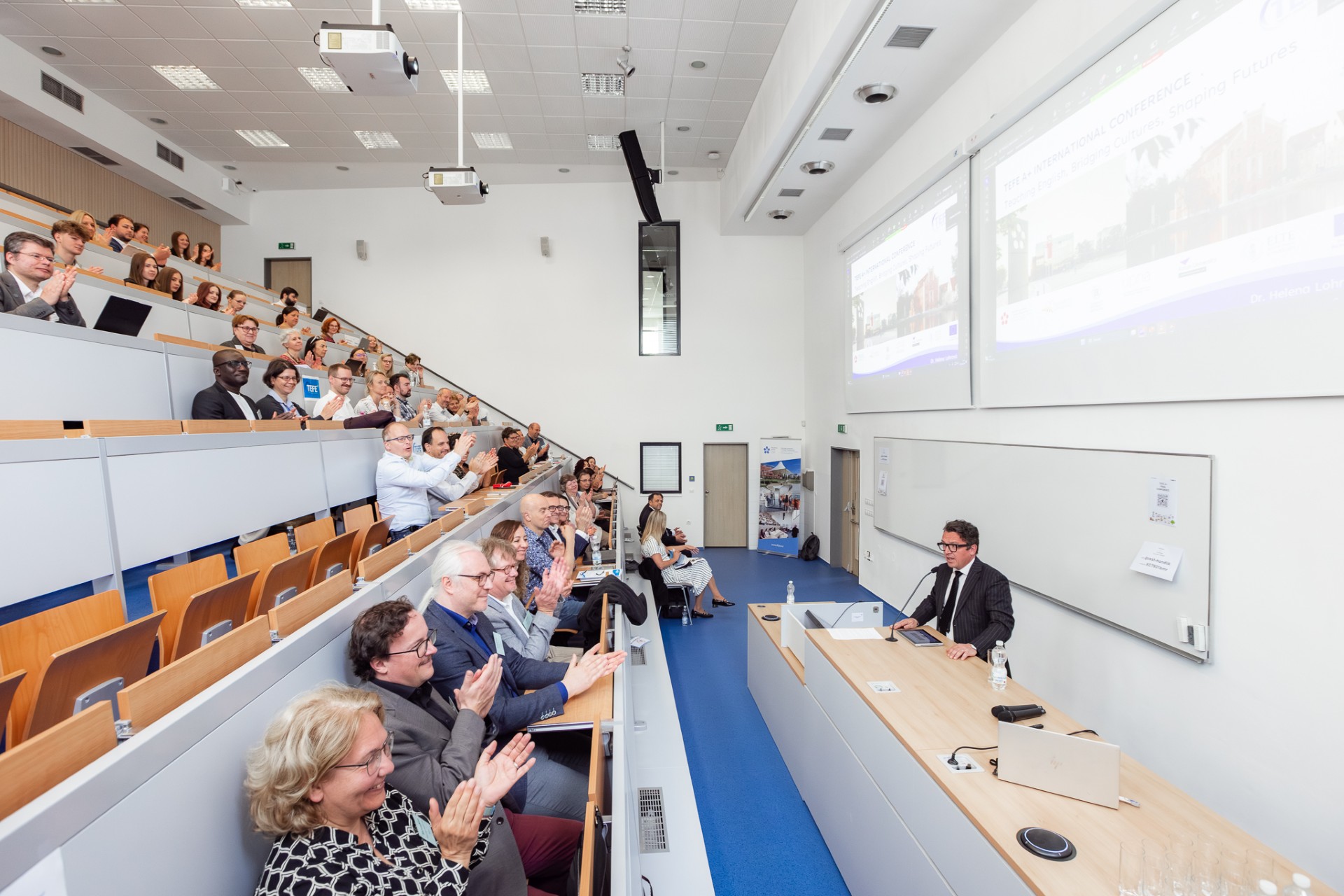
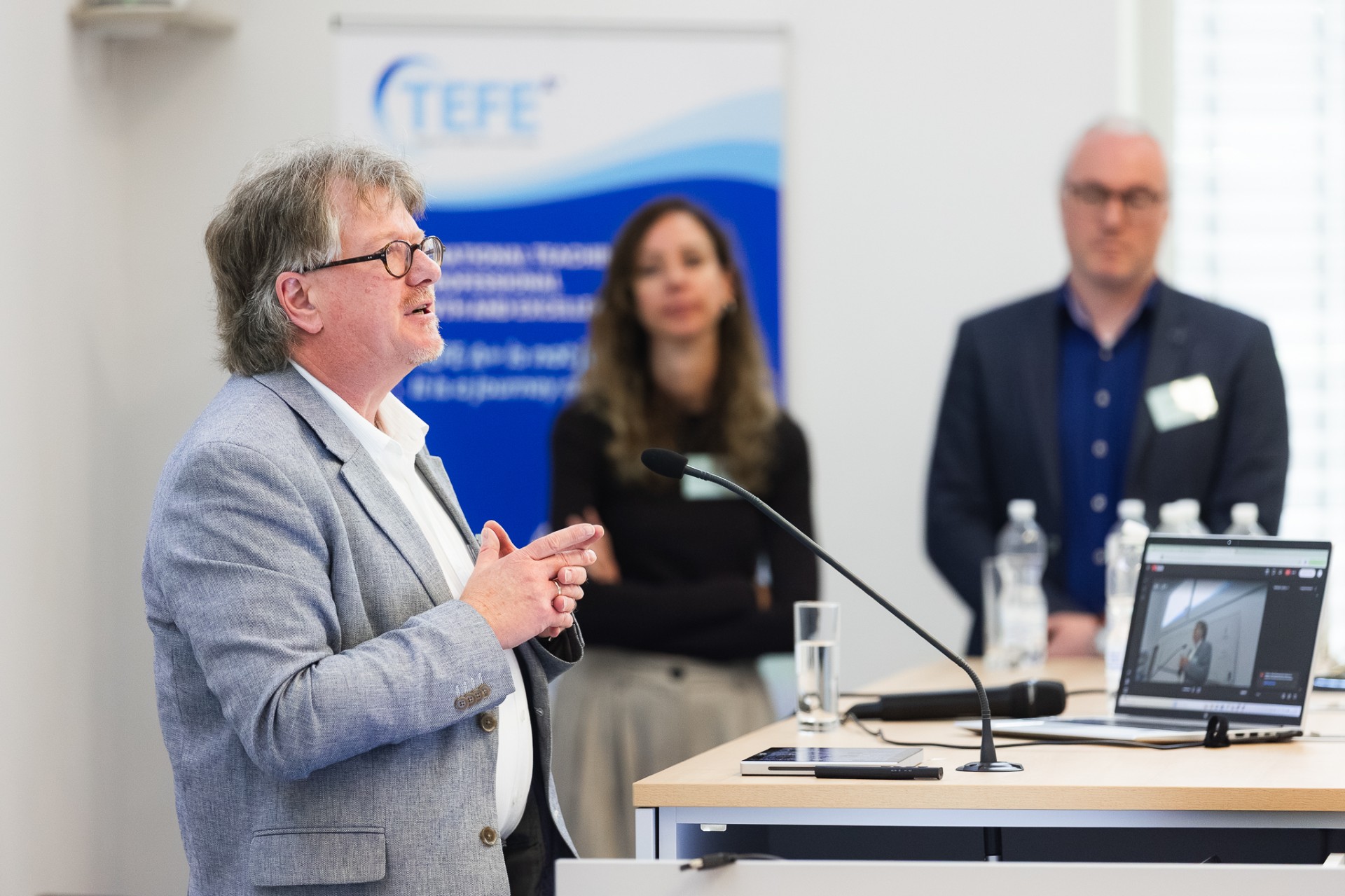
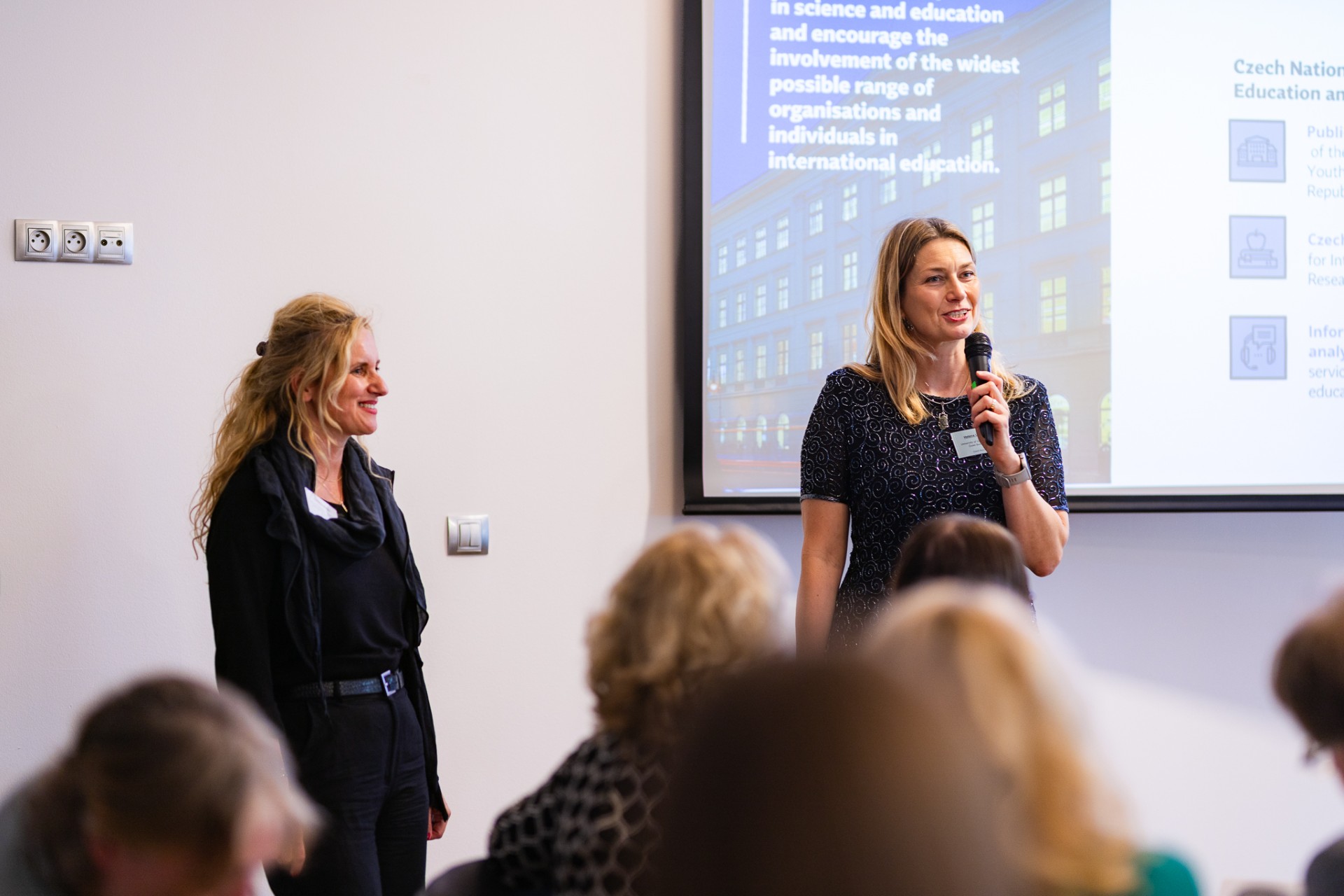
The conference was opened by the Vice-Rector of the University of South Bohemia, PhDr. Pavel Král, Ph.D., the Vice-Dean of the Faculty of Arts for International Relations and Development, doc. PhDr. Rostislav Smíšek, Ph.D., the Director of the Institute of English Studies, doc. PhDr. Ladislav Nagy, Ph.D., and the TEFE A+ Project Coordinator, Mgr. Helena Lohrová, Ph.D.
The conference focused on creating conditions for the long-term and systemically supported integration of international teaching placements into the education of future teachers of English.
In many professions today, international professional experience is regarded as a natural and indispensable part of professional preparation. Through such experiences, students gain knowledge and practical understanding that cannot be fully developed within the university environment alone. International professional experience is also highly beneficial for future teachers. However, international teaching placements are not yet a standard component of teacher education, as their implementation requires a high degree of trust and long-term cooperation between universities, partner schools, and mentor teachers. During placements, student teachers do not merely enter a professional workplace; they become directly involved in the educational process and the everyday work with children and young people.
High-quality international teaching practice therefore requires not only the organisational coordination of mobility, but also stable partnerships with schools, systematic support for mentor teachers, careful preparation of students for entering different school environments, and institutional conditions that enable long-term cooperation.
At present, however, higher education systems still support the internationalisation of teaching placements only to a limited extent. In practice, there is often a lack of sufficiently flexible administrative mechanisms, stable networks of partner schools, systematic mentor support, and longer-term institutional frameworks enabling sustainable student participation in international teaching placements. One of the main aims of the conference was therefore to open discussion on the possibilities of creating a stable and sustainable system of international teaching practice for future teachers.
Over recent years, the TEFE A+ project has sought to build such a system of cooperation between universities, schools, and mentors. The TEFE A+ model enables the implementation of high-quality international teaching placements in authentic school environments while simultaneously supporting the professional development of future teachers already during their studies, including through short-term hybrid mobility formats such as Blended Intensive Programmes (BIPs). International teaching placements are thus not viewed as isolated mobility experiences, but as part of long-term professional collaboration between universities, schools, and mentor teachers across Europe.
TEFE A+ is based on the belief that future language teachers need not only theoretical knowledge but also direct experience of different educational environments, school cultures, and approaches to teaching in an international context. Teachers of English today do not teach grammar or language systems alone; they primarily teach students how to communicate, think critically, collaborate, and navigate diverse social and cultural contexts through the medium of a foreign language. They help learners develop the ability to discuss a wide range of contemporary issues, work with foreign-language sources and literature, and communicate actively in international settings. At the same time, many student teachers also study a second subject specialisation, meaning that the experience gained through international teaching placements enriches additional areas of their future professional practice. For this reason, it is essential that student teachers already during their studies gain practical experience, build professional relationships with peers abroad, and encounter the realities of teaching beyond their domestic educational environment.
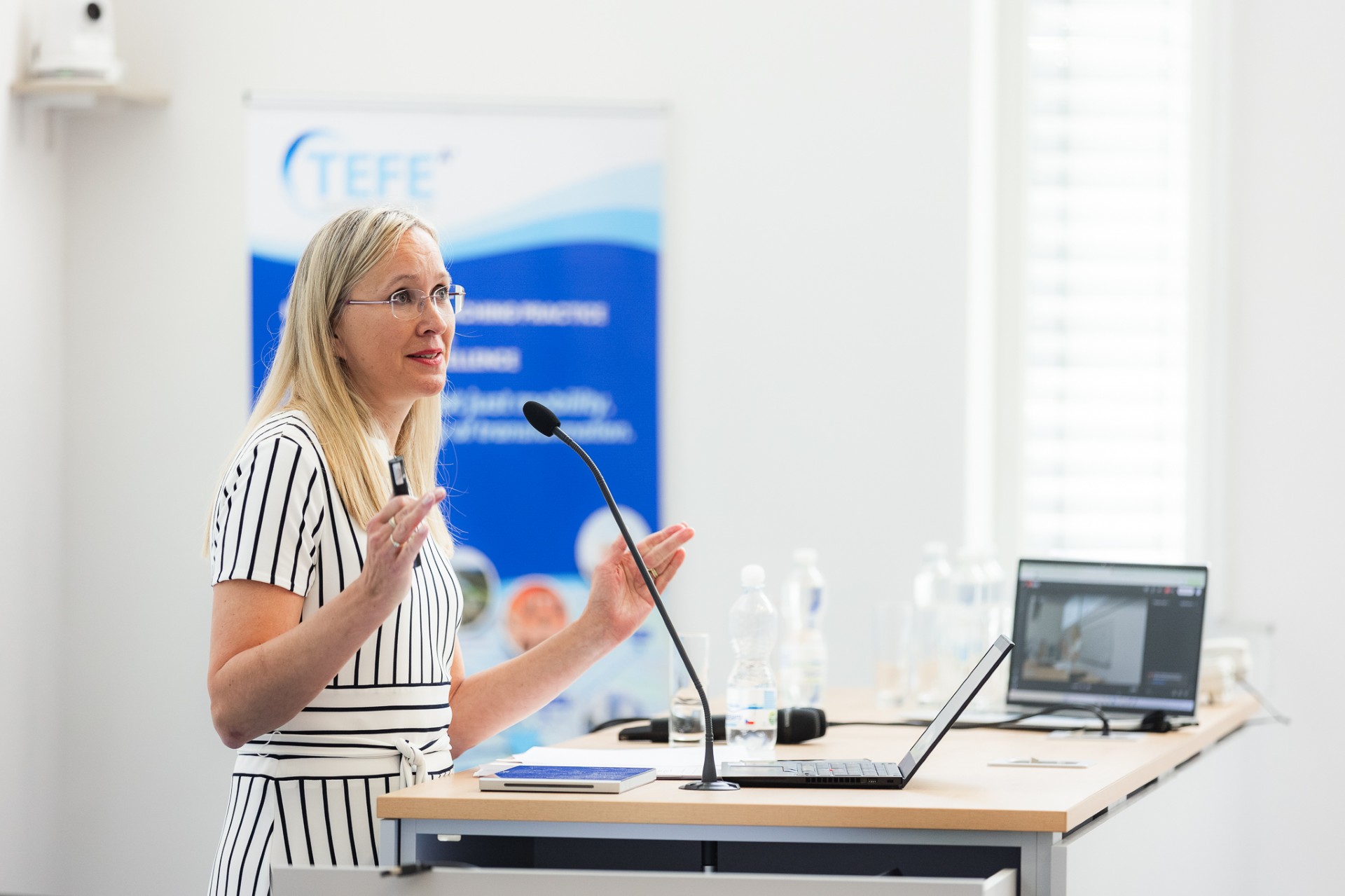
The opening keynote lecture of the TEFE A+ conference was delivered by Eva Tučková from the Czech School Inspectorate and, at the same time, the Czech representative on the Governing Board of the European Centre for Modern Languages (ECML) of the Council of Europe. In her presentation, she emphasised the importance of the professional development of future teachers and the need to support the formation of teacher professional identity from the very beginning of university studies. She also highlighted the fact that contemporary schools represent environments that are both highly enriching and socially significant due to the work with young people, while simultaneously placing considerable professional and personal demands on teachers, as many broader social issues are reflected in the everyday reality of classroom life. The new generation of teachers must therefore be not only professionally equipped, but also prepared to work in increasingly diverse school environments.
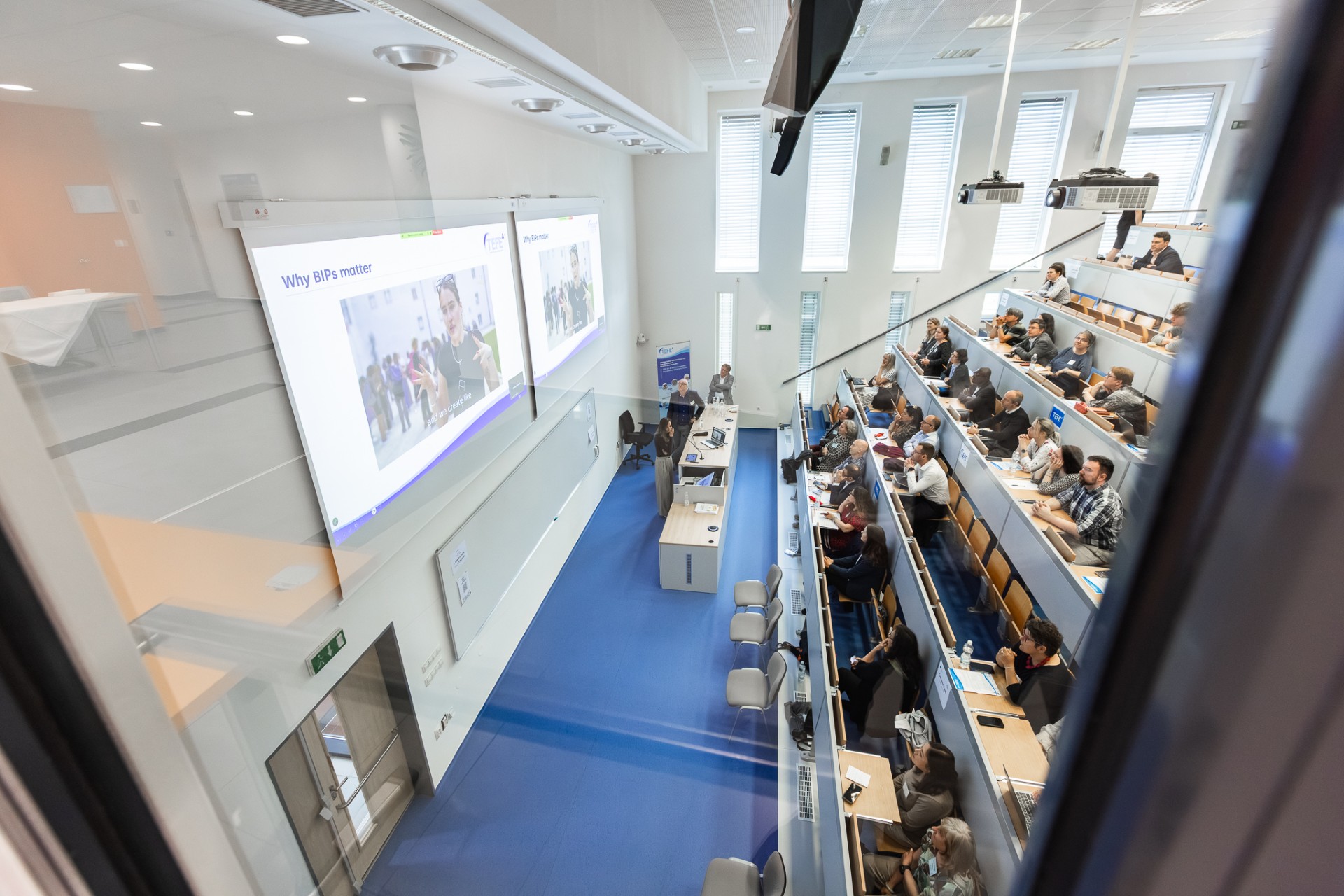
The conference also presented concrete outputs of the TEFE A+ project, including the model of international teaching placements, the TEFE Framework (2023), Blended Intensive Programmes (BIPs), and COIL tools supporting reflective collaboration between student teachers and mentor teachers during international placements. Individual sessions were delivered by members of the international consortium from partner universities in Germany, Spain, Hungary, Slovakia, and the United Kingdom.
The afternoon programme consisted of roundtable discussions during which participants shared experiences with the internationalisation of teacher education, identified key conditions for integrating international placements into teacher preparation, and discussed possibilities for their further development. The expert roundtable discussions were moderated by Mgr. Alena Prošková, Ph.D., Vice-Dean for Accreditation, Teacher Education Programmes, and Quality at the Faculty of Arts, University of South Bohemia.
The discussions were also attended by representatives of the higher education policy and internationalisation departments of the Ministry of Education, Youth and Sports of the Czech Republic and the Ministry of Education, Research, Development and Youth of the Slovak Republic. The organisers would like to thank Samuel Jezný and Martina Kokavec Beďaštová for their participation in discussions focusing on possibilities for the systemic support of international teaching placements, the development of long-term partnerships between schools and universities, and the more stable integration of international placements into teacher education programmes.
Student teachers themselves also contributed significantly to the conference programme by sharing their experiences from international teaching placements and reflecting on the ways in which these experiences influenced their professional development, self-confidence, and understanding of the teaching profession.
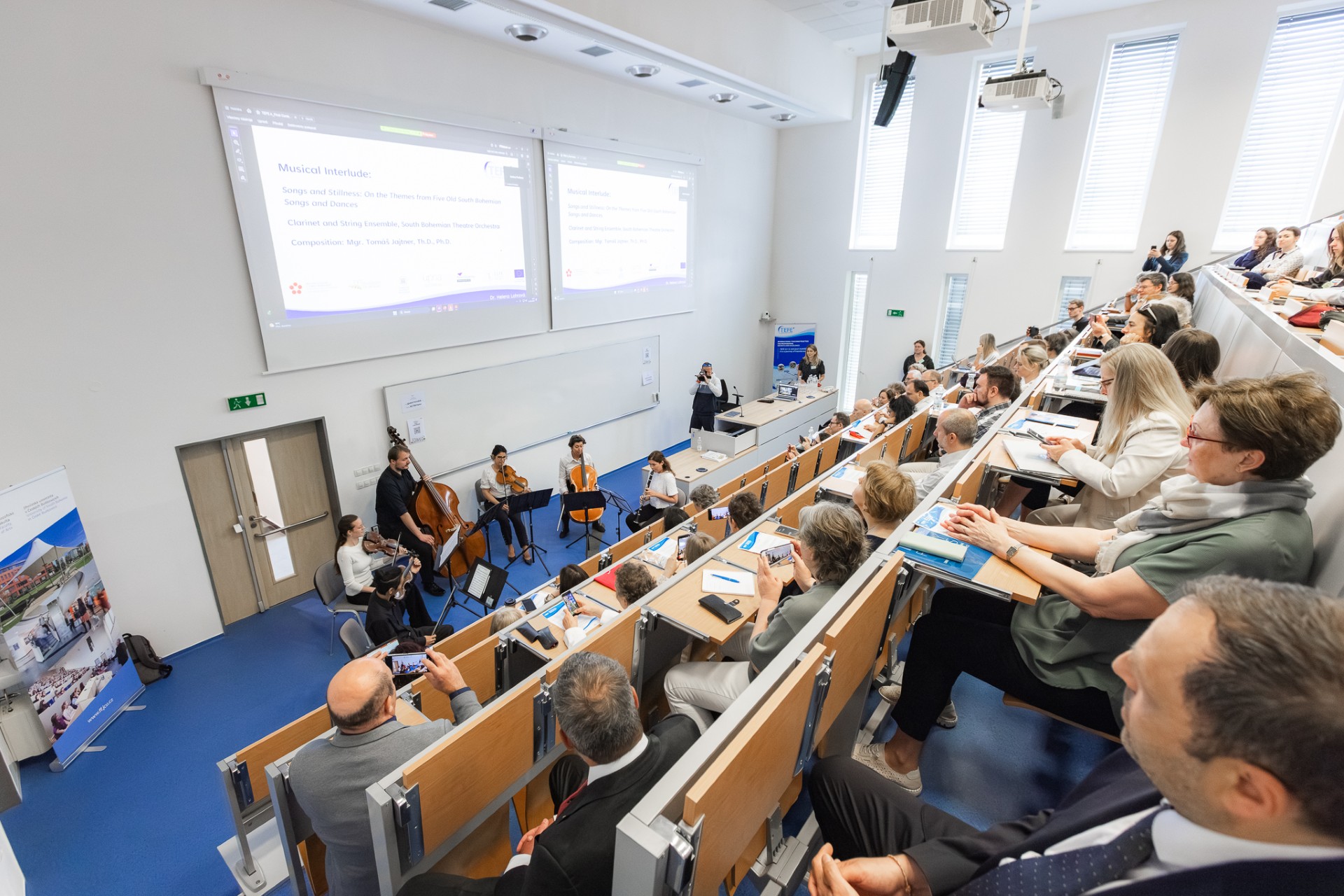
The cultural programme was enriched by a musical intermezzo performed by the Bendissimo sextet, inspired by South Bohemian cultural traditions and featuring an original composition by Mgr. Tomáš Jajtner, Th.D., Ph.D. The performance symbolically connected the international character of the conference with regional cultural traditions.
The discussions throughout the conference confirmed the need to continue building European partnerships that enable long-term and well-mentored mobility opportunities for future teachers. At the same time, they demonstrated that the internationalisation of teacher education cannot rely solely on the enthusiasm of individual academics, but requires long-term institutional cooperation, the support of partner schools, and more stable systemic integration at both national and European levels.
The TEFE A+ project, coordinated by the Faculty of Arts at the University of South Bohemia, therefore aims not only to support student mobility, but above all to contribute to the development of a functional European system of international professional preparation for future teachers based on cooperation between universities, schools, and mentor teachers across the European educational space.
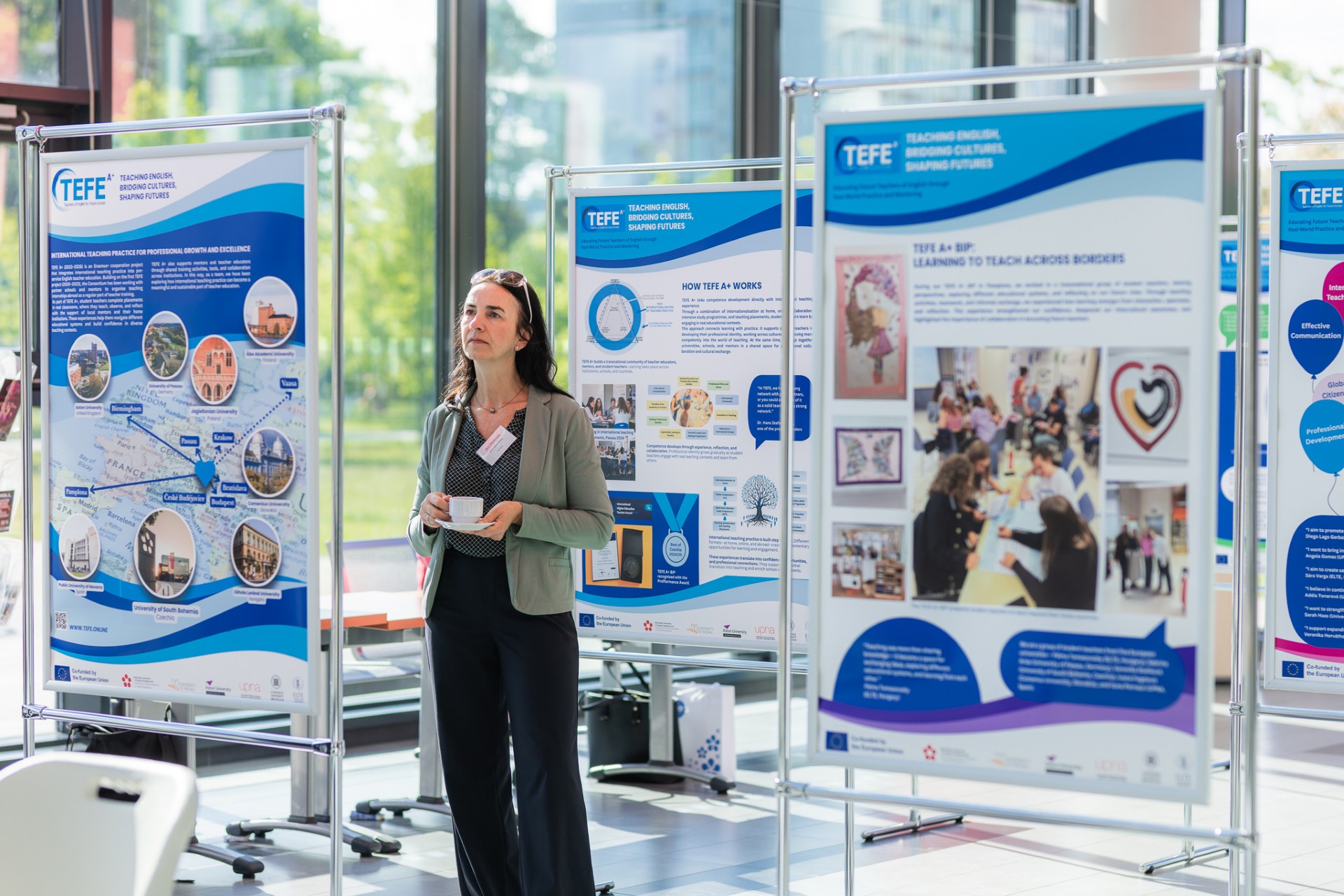
As part of the conference week, an exhibition of TEFE A+ project posters was ceremonially opened on 18 May 2026 in the foyer of the Faculty of Arts. The exhibition will remain open until 12 June 2026.
The organisers would also like to thank all members of the TEFE A+ project team and the administrative staff of the Faculty of Arts for their support in organising the conference.


