




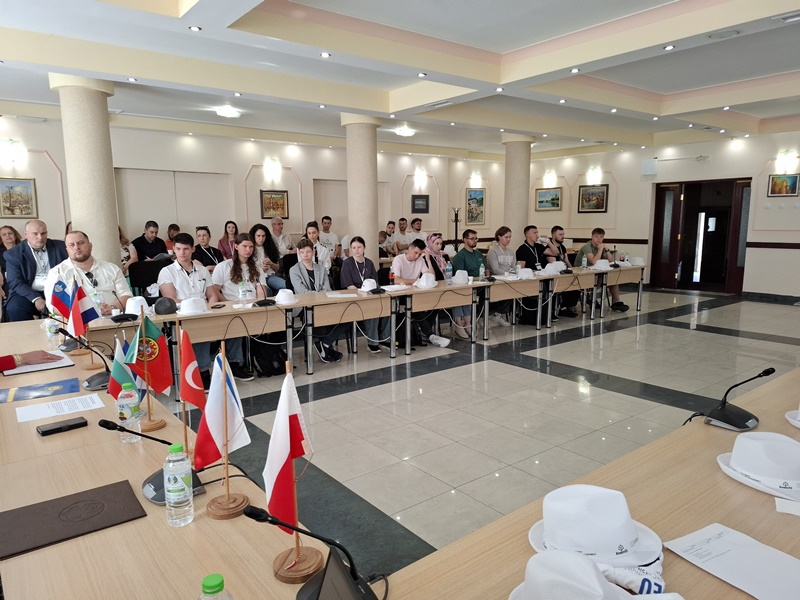


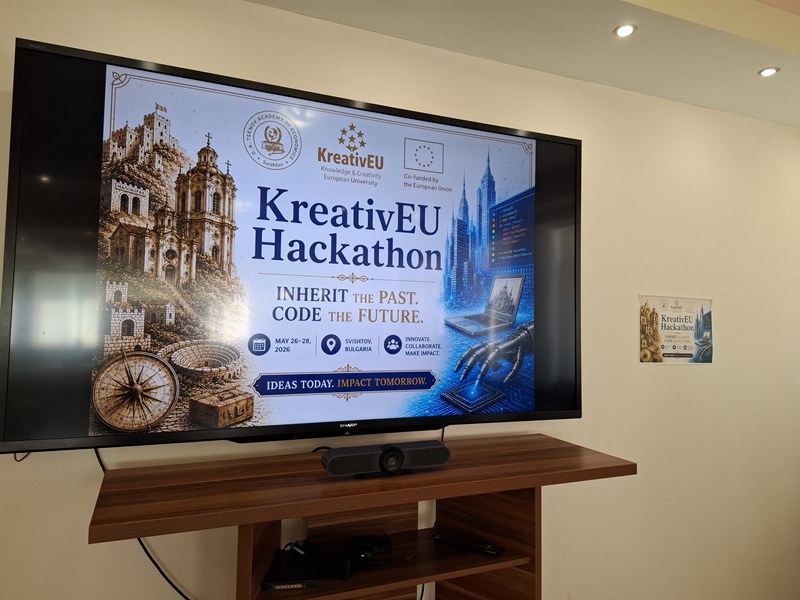
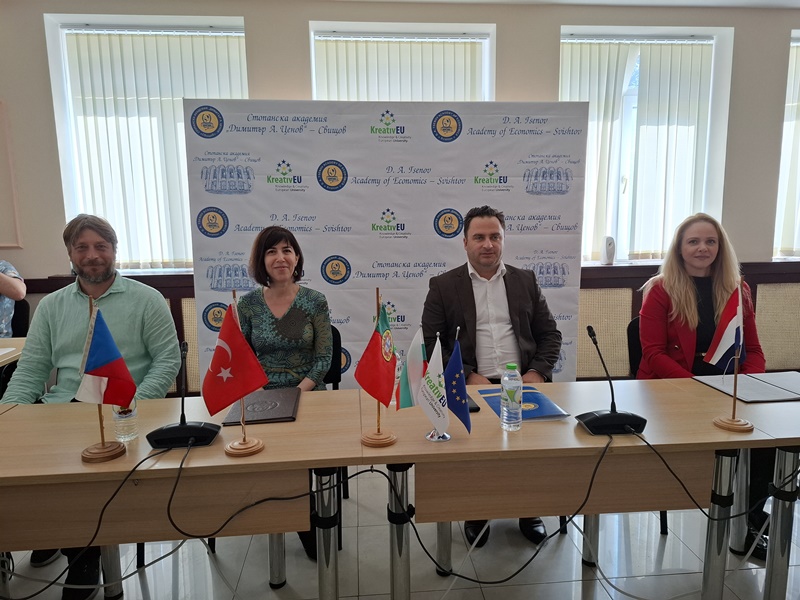
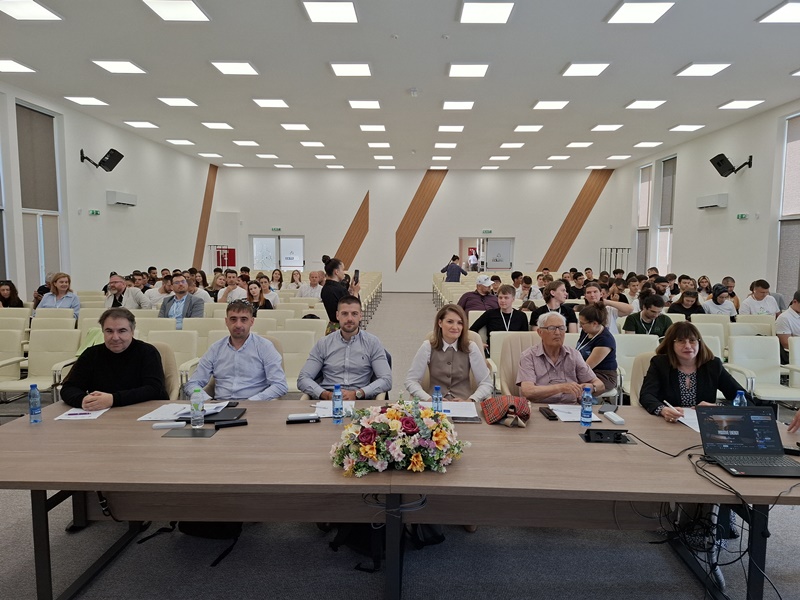
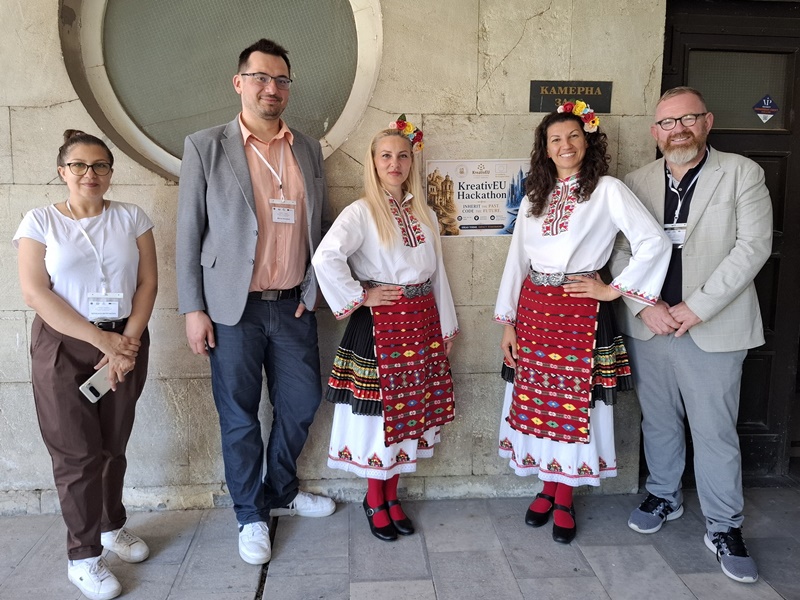
Students of the Faculty of Economics of the University of South Bohemia participated in the international KreativEU Hackathon: "Inherit the Past. Code the Future." held from 26 to 28 May 2026 in Svishtov, Bulgaria. The event took place at the D. A. Tsenov Academy of Economics and was part of the activities of the European university alliance KreativEU.
The hackathon focused on the intersection of artificial intelligence, cultural heritage, creativity, innovation and entrepreneurship. The programme involved 23 students and 7 mentors from partner universities of the KreativEU alliance. Participants were divided into five international teams, which worked on digital solutions supporting the presentation of the cultural and historical heritage of Svishtov and beyond.
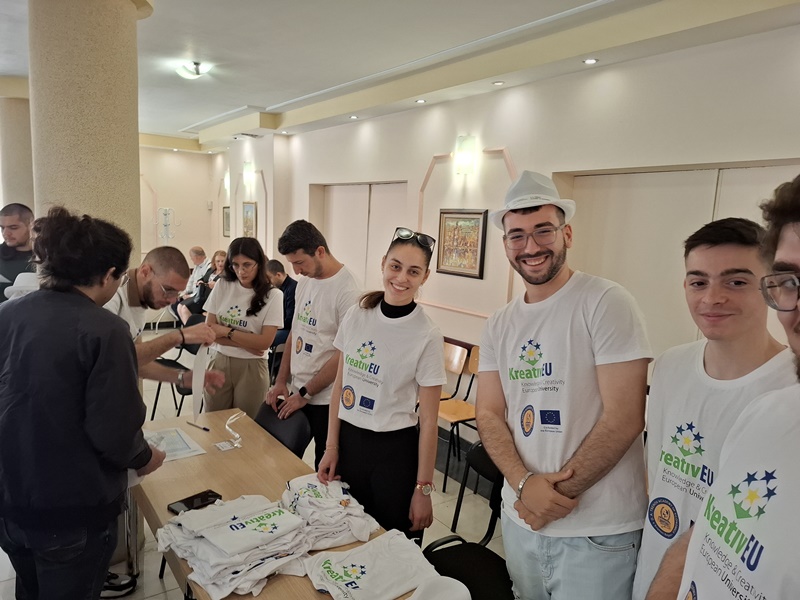
The first day of the programme was dedicated to the opening ceremony, getting to know the participants, and preparation for the main competitive part. The programme included a workshop entitled "AI in Business Decision-Making", a KreativEU incubating event, and networking activities directly in the city of Svishtov, including a Scavenger Hunt and the team game Gelsoft Crossfire. These activities helped participants better familiarise themselves with the city, its history and cultural context, which they subsequently drew upon when developing their projects.
The main part of the hackathon launched on the second day and lasted 24 hours. During this intensive technology marathon, teams developed their ideas, consulted with mentors, and prepared functional prototypes and final presentations. The resulting projects focused on topics such as interactive AI avatars, virtual reality, sustainable tourism, smart tourist routes, and new approaches to working with cultural heritage.
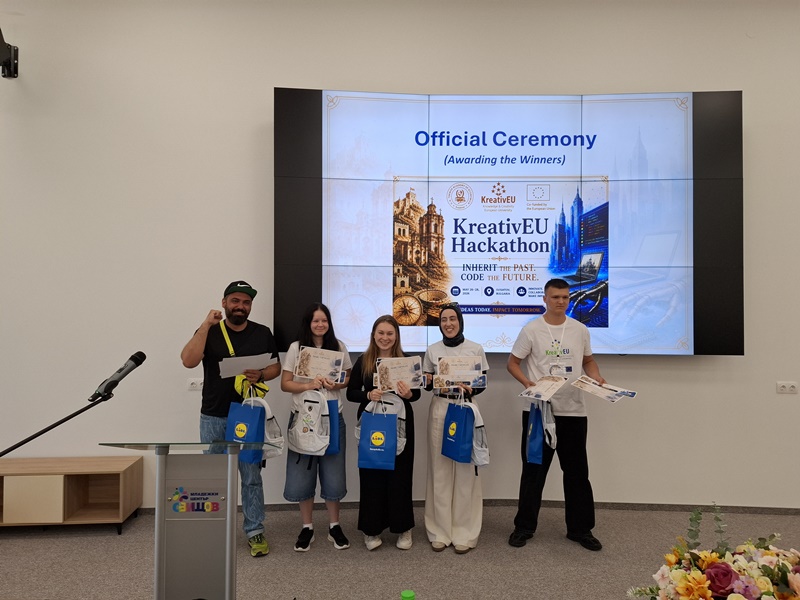
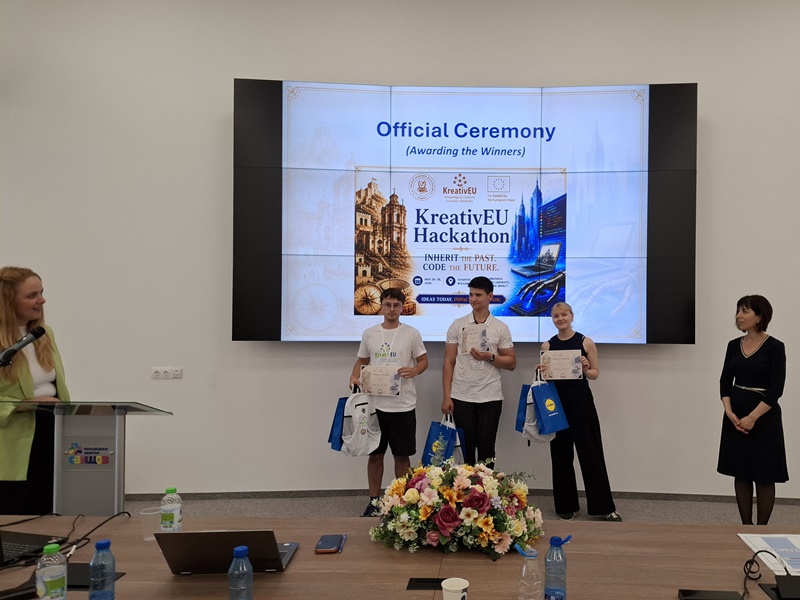
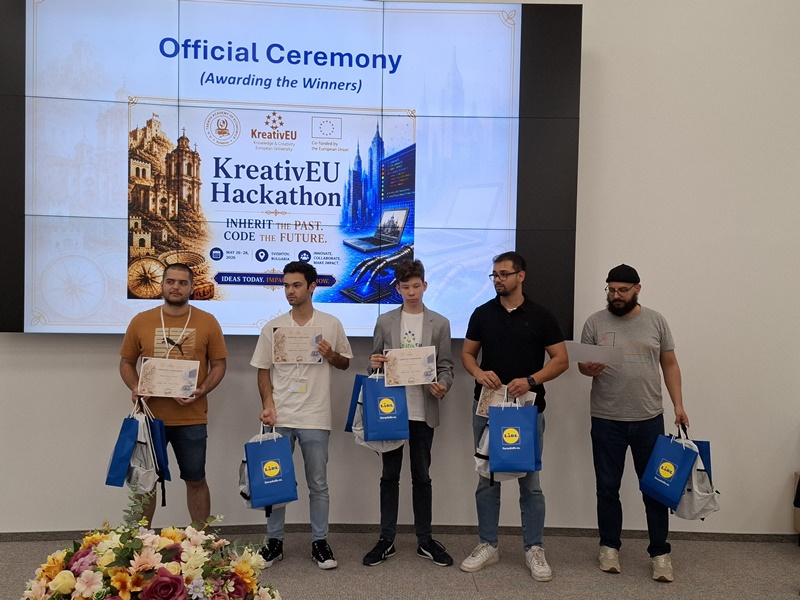
The third day of the programme was devoted to final team presentations, evaluation by an expert jury, and the official announcement of results. The student projects were assessed by a jury composed of specialists in the fields of culture, archaeology, software architecture and data analytics.
The Faculty of Econimics USB students made a significant impact in the international competition. First place was awarded to the team named Zemlja, whose member was Kristýna Moravcová, and second place went to the team Glagoli with their project LocAIa, whose member was Vítek Hošek.
The Zemlja project is a proposal for a mobile application using artificial intelligence to promote cultural heritage and tourism. The application allows visitors to discover historical sites through interactive storytelling, virtual historical avatars, audio guides and multimedia content tailored to different age groups. It is piloted in the city of Svishtov, with the aim of raising the profile of local history and culture at an international level. The project also supports the preservation of cultural heritage through digital archiving, the development of the local economy through tourism, and the creation of a modern and attractive experience for visitors.
The LocAIa project, presented by the team Glagoli, is a proposal for a cultural tourism application that uses artificial intelligence to create personalised routes through the city. Rather than offering a standard list of landmarks, the application prepares a route for the visitor based on their available time, mode of transport, mood and interests. It was also piloted in the city of Svishtov and its cultural heritage. The application includes an interactive map, audio narration, an AI guide that responds exclusively on the basis of verified local descriptions, and the ability to save visited locations as a personal collection of experiences.
Beyond the competition itself, the hackathon provided participants with valuable experience in working within a multicultural team, developing a project under time pressure, and presenting their own ideas before an expert jury. The closing part of the programme was also devoted to networking, feedback and reflection, during which participants shared their experiences and discussed the potential further development of the prototypes they had created.


