


Scientists from the University of South Bohemia in České Budějovice (USB) monitored the occurrence of psychoactive drugs in water and in the early developmental stages of fish living in a stream affected by municipal pollution. As part of an international research collaboration with colleagues from Baylor University in the USA, they found groundbreaking information on the accumulation of psychoactive drugs in the eggs and fry of trout - a native species in our streams. Its eggs develop hidden in gravel for several months after spawning and can be affected by foreign substances present in the water throughout this time. Researchers have provided the first evidence of the accumulation of psychoactive drugs, which must not be given to pregnant women because of potential harm to the mother, the fetus, or disruption of the pregnancy, in the eggs and hatchlings. The results of the research, which was carried out within the framework of the project 20-04676X of the Grant Agency of the Czech Republic, have been published in the prestigious journal Environmental Science and Technology.
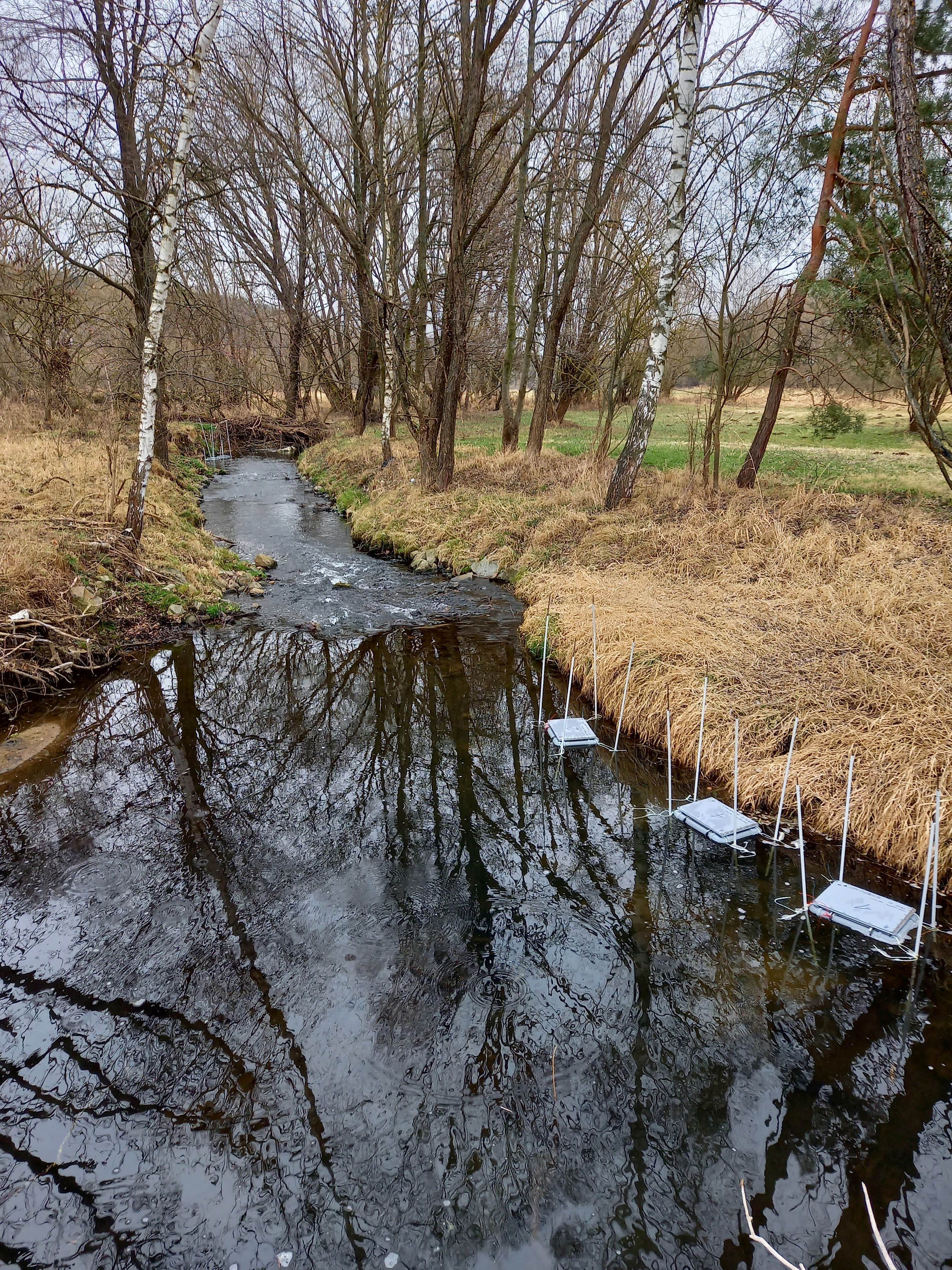
The research was conducted under realistic conditions of a small stream influenced by the inflow of "treated" wastewater from a wastewater treatment plant (WWTP). It was conducted at two sites: a control site above the WWTP and a polluted site below it. Scientists monitored and compared the development of eggs and subsequently hatched fry between sites over several months. At the same time, the concentrations of selected psychoactive drugs in continuously sampled samples of these developmental stages were monitored and the level of their so-called bioaccumulation, i.e. their potential to accumulate in organisms, was assessed.
"This was unique research that was not conducted in the laboratory but under real flow conditions. It is a real scenario relevant to a significant group of our streams that are affected by this type of pollution. Successful natural reproduction is crucial for wild fish populations, and this success can be threatened by this type of pollution," explains Assoc. Roman Grabic from the Laboratory of Environmental Chemistry and Biochemistry at the Faculty of Fisheries and Protection of Waters, USB. He conducted the research together with Assoc. Kateřina Grabicová from the same laboratory and Bryan W. Brooks, professor of environmental science and public health at Baylor University.
Many factors influence the health of fish in our streams
The World Health Organization has noted an increase in the global consumption of psychoactive drugs since the COVID-19 pandemic, prompting South Bohemia and Baylor scientists to look more intensively at the occurrence of these substances in aquatic ecosystems and their effects on aquatic organisms. As the human population's consumption of psychoactive substances increases, so does their presence in treated wastewater and subsequently in the aquatic environment. Some psychoactive drugs must not be used by pregnant women because of their ability to cross the maternal placental barrier into the developing foetus, which may affect its development. The fish brain shares many receptors and enzymes with the human brain, suggesting that the bioaccumulation of psychoactive drugs during early development may compromise proper development.
By tracking fish from eggs to young wild individuals, scientists have found that drugs used to treat conditions such as depression, anxiety, or cognitive decline accumulate in these fish. Several of the drugs studied exceeded the internationally recognised safe limit for bioaccumulation, meaning that concentrations in eggs and other developmental stages of the fish were higher than regulators consider acceptable from a water-quality perspective.
Researchers on this team broke further boundaries with a new approach that enabled them to obtain deeper, repeatable results on the effects of pollution on fish egg and hatchling development, directly upstream and downstream of the pollution source. This approach has allowed scientists to observe the effects of long-term pollution exposure on developing early-stage fish under completely natural conditions.
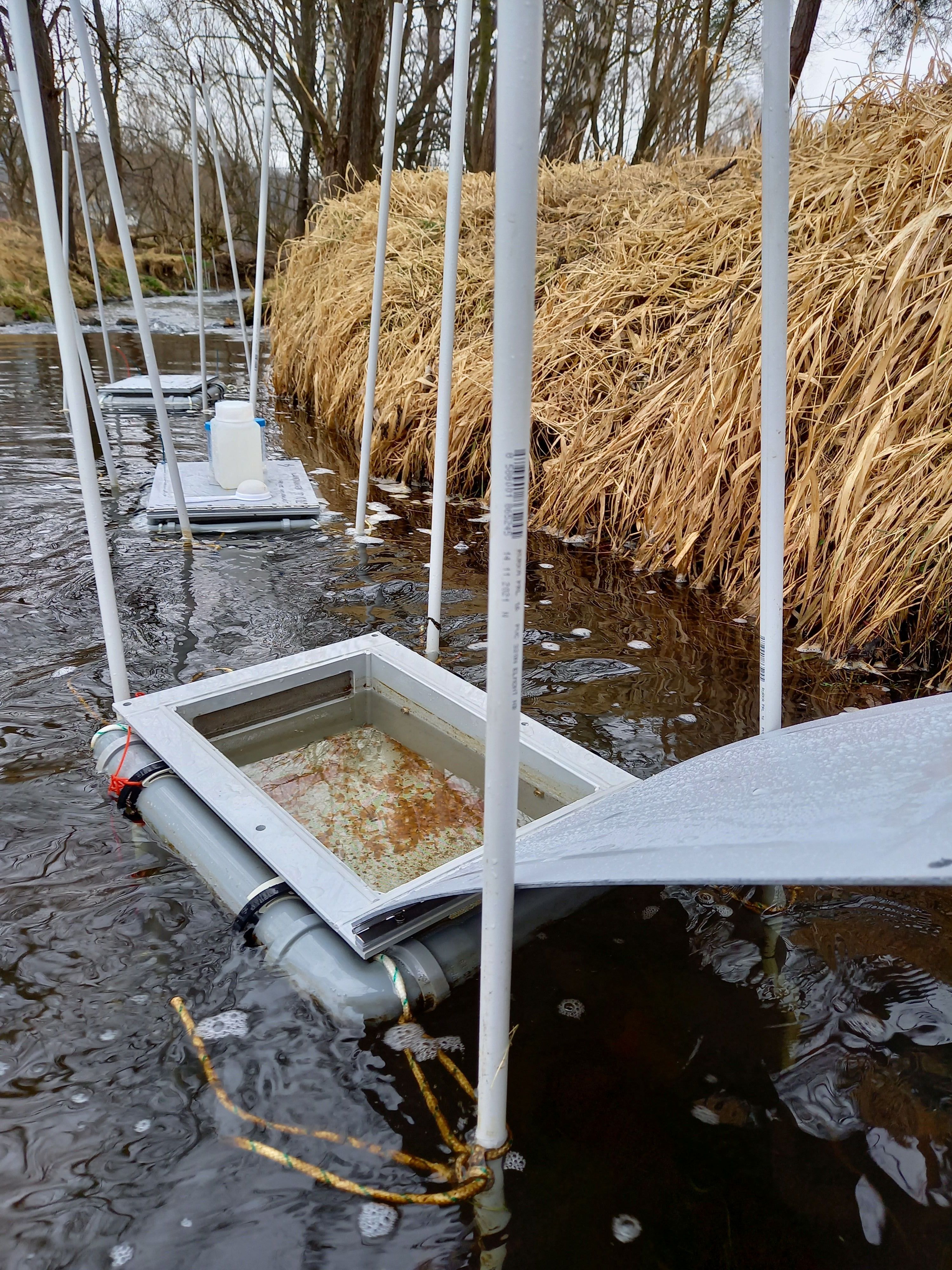
"We used special floating apparatus for egg incubation, which we placed in numbers of several directly in the stream above and below the outflow of treated wastewater from the WWTP. We placed trout eggs in the apparatus and then periodically monitored mortality and sampled for analyses of developmental rates and levels of observed psychoactive substances at early developmental stages during incubation and subsequent development. At the same time, we also monitored the occurrence of foreign substances in river water. After flushing the fry, we planted them in the stream and then monitored them further by electrofishing. At the end of the experiment, we also analysed the sex ratio of the control and exposed groups," adds Kateřina Grabicová.
Czech-American cooperation
Researchers from the University of South Bohemia and Baylor University have long collaborated on projects related to water quality, fish contamination, and public health. Each of the partners has unique know-how and infrastructural facilities, represented by the South Bohemian Research Centre for Aquaculture and Biodiversity of Hydrocenoses /CENAKVA/ at USB and the "Environmental Health Science centre" at Baylor University.
"The partnership with Baylor University represents an exceptional alignment of complementary expertise. By combining our expertise, we are able to bring scientifically sound answers to some of the most pressing environmental challenges of our time," adds Prof. Vladimír Žlábek, Vice-Rector for International Relations at the University of South Bohemia.
"International partnerships such as this one uniquely advance science and bring mutual benefits to both institutions, as our skills complement each other in finding answers to new questions about water resources in Central Texas and Central Europe that are important for advancing global knowledge," concludes Prof. Bryan W. Brooks on behalf of the American side.
The results of the current research raise an important question: how can chemicals affect fish development, behaviour, and long-term population health? The researchers note that the purpose of the research is not to stigmatize psychoactive drugs, but to provide data that can support the development of more environmentally friendly pharmaceuticals, promote proper disposal of unused drugs, lead to innovations for more sustainable healthcare, and promote healthy freshwater ecosystems and fisheries.


