


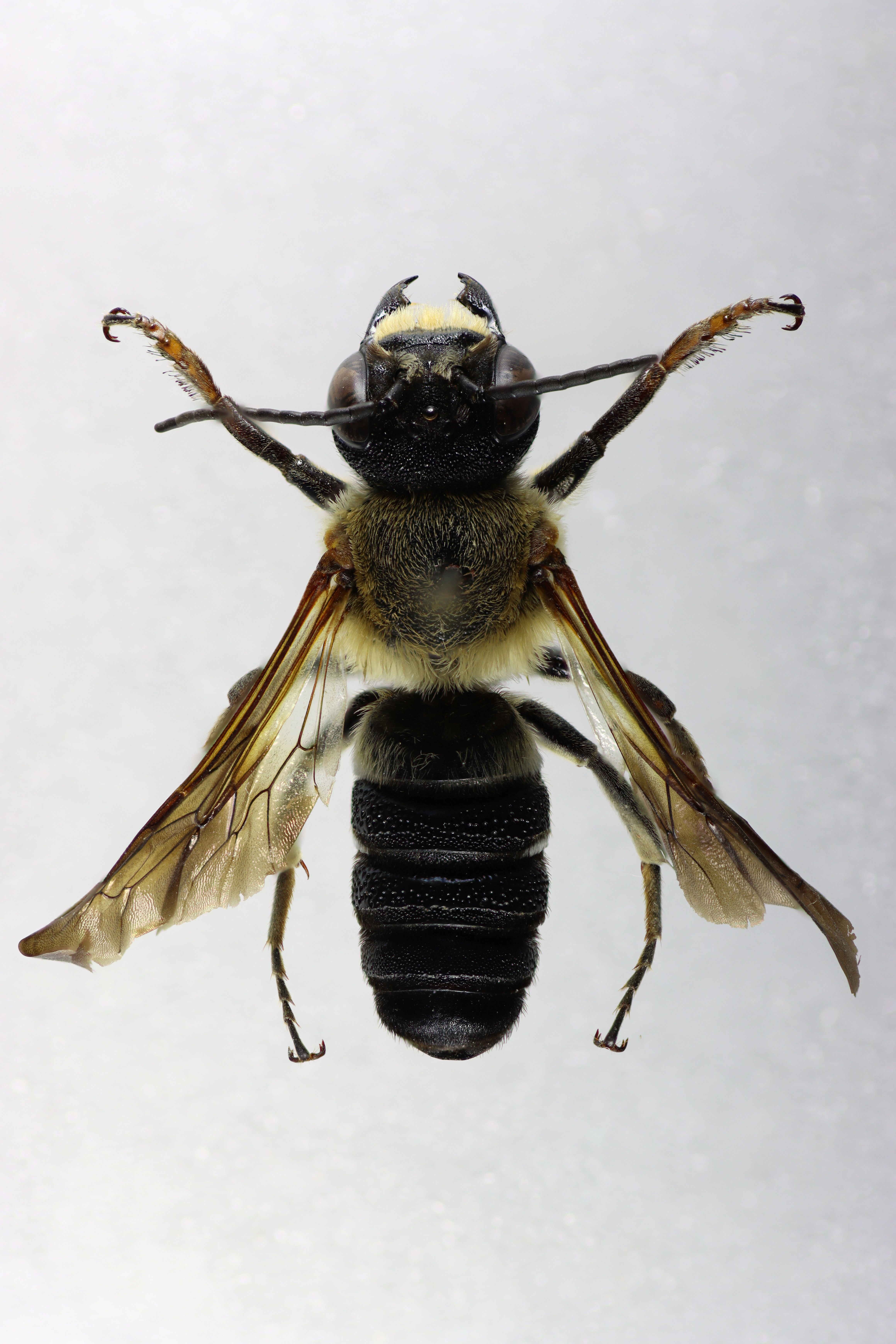
During a field survey of wild horse pastures in the Šumava Mountains, South Bohemian biologists came across a striking find: the giant resin bee (Megachile sculpturalis). This invasive species of solitary bee originates from East Asia, measures up to 2.5 centimeters, and was previously known in the Czech Republic only from South Moravia. This year's extreme heat likely contributed to its surprising occurrence at an atypical altitude of around 700 meters.
The giant resin bee (Megachile sculpturalis) was first introduced to Europe at the turn of the century, likely via maritime shipping. Following the first record in the south of France, it began spreading across Europe. It currently occurs throughout most of Southwestern Europe (France, Italy, Spain) and is expanding into Central Europe (southern Germany, Austria, Hungary, Slovakia). In the Czech Republic, it was first recorded in the summer of 2025 in South Moravia. However, this year's record comes from the other side of the country, where the species was documented on the eastern edge of the Šumava Protected Landscape Area at an altitude of around 700 m, which is atypical for this species. The extreme heat at the beginning of this summer likely contributed to its occurrence in such conditions.
“During a survey of aculeate hymenopteran diversity near the pasture at Blanický mlýn, I spotted an insect that looked unusual at first glance—far too large for any of our native leafcutter or resin bees. Once I realized what I was looking at, I immediately caught the insect in a net, because without a voucher specimen or photograph, a find so far from its known distribution in Moravia would be hard to believe,” describes Michal Perlík from the Faculty of Science at the University of South Bohemia.
The giant resin bee nests in natural cavities, much like native megachilid bees. Unlike native species, however, its size of around 2.5 cm leads it to inhabit larger cavities. Cavities occupied by this species can be identified by the plug sealing the completed nest. In the case of the giant resin bee, this plug is made of pitch and resin, giving it a distinct, glossy golden appearance.
The giant resin bee visits a wide range of flowering nectar-producing plants. In European conditions, females prefer the pollen of the Japanese pagoda tree (Sophora japonica).
Although it is a conspicuous invasive species that has been present in Europe for a long time, its impact on local biodiversity remains unknown. This is due in part to its solitary nesting habits, as well as the fact that, given its size and flight period, it directly competes with very few native species. Nevertheless, its spread needs to be monitored; even if it does not appear to directly harm native species, it may carry novel pathogens that could affect wild pollinator populations in the future.
The species was recorded during a survey of Exmoor pony pastures as part of the TA CR research project: Refaunation of Incomplete Ecosystems by Large Herbivores in the Context of the Nature Restoration Law – ReNEVeK.


